
Press release : “Let’s Speed Up child-friendly Solutions”
Brussels 06.05.2026
PRESS RELEASE
“Let’s Speed Up child-friendly Solutions”
First International Kidical Mass Calls for prioritizing child-rights in EU Urban Mobility framework
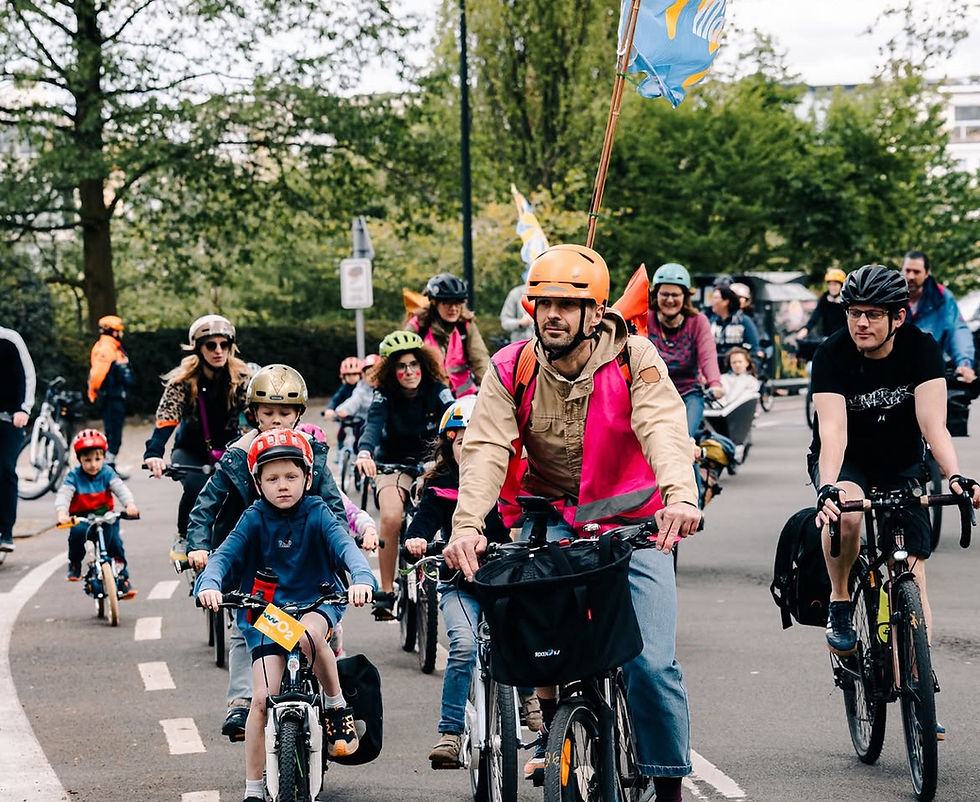
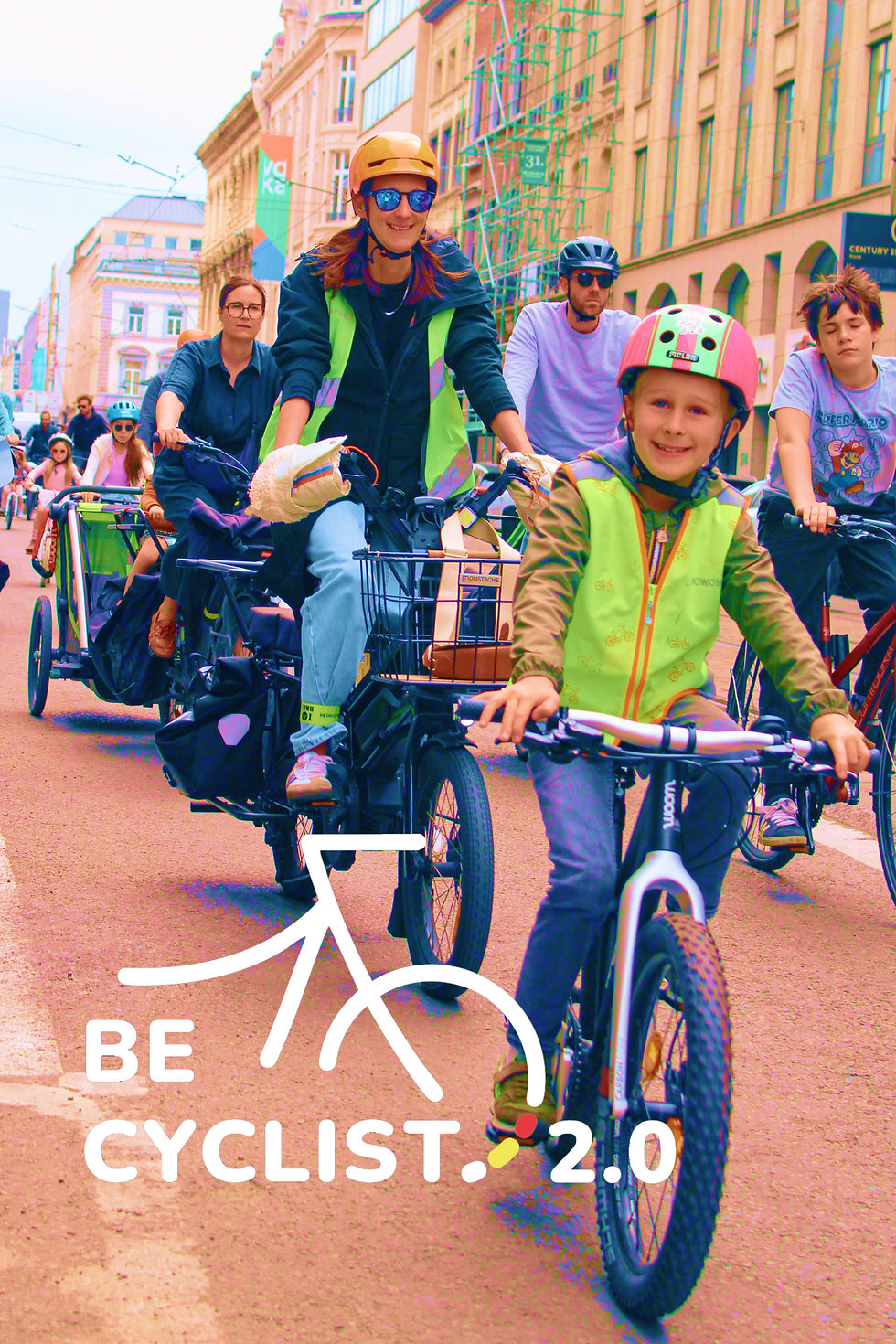
This Sunday, 10 May, Brussels will host the “Grande Kidical Mass”, a large family-friendly cycling parade expected to bring together several hundred participants from across the city and beyond. Organised by Kidical Mass Belgium, the event combines a festive atmosphere with a clear political message: the urgent need for safer, more accessible urban spaces to enable children’s and families’ active mobility solutions. The Brussels ride also serves as a prelude to the first international Kidical Mass gathering planned for 2026 in the Belgian capital.
Across the European Union, many children are still facing obstacles in moving safely and independently through urban environments. Routes for daily journeys to school remain fragmented and, in many cases, hazardous, shaped by high traffic speeds, insufficient infrastructure and inconsistent street design.
Advocates argue that the issue is no longer a lack of knowledge, but a failure of policy implementation. While the EU formally endorses in its road safety and urban mobility policy frameworks the ‘Vision Zero’ (towards zero road deaths) and the ‘Safe System’ approach, these principles have yet to be translated more rigorously into minimum safety standards for children’s everyday mobility.
Throughout May 2026, the “Streets for Kids” Action Weeks initiative of Clean Cities and Kidical Mass encourages citizens to take part in creating safer, cleaner, greener city environments. Thousands of children, together with environmental associations and parent groups across Europe will take to the streets with bike rides, flash mobs, circle games, and other in over 400 events.
From Vision to Implementation
Kidical Mass Belgium, working jointly with the Clean Cities initiative, is calling for a fundamental shift in urban mobility policy: putting child rights at the core, with safe access to schools, independent movement, and inclusive urban spaces, away from a model that tolerates “acceptable risk” and towards one that guarantees systematically safe and inclusive environments for all.
Campaigners stress that any transport system in which a child cannot safely cycle to school falls short of Vision Zero ambitions.
Policy Priorities for the European Union
To accelerate progress, organisers are urging EU institutions and Member States to better embed child-friendly mobility standards into urban transport policies and funding mechanisms. Three priority areas have been identified:
1. Safe street design, especially around schools, as a baseline conditionThis includes default 30 km/h speed limits in urban and residential areas, EU-level guidance on school streets, continuous protected cycling networks along major urban corridors, and safer intersection design through measures such as conflict-free crossings and raised platforms.These measures, campaigners argue, should be directly linked to EU funding instruments, including Cohesion Policy and urban mobility support, in particular in view of the National and Regional Partnership Plans of the EU’s next Multi-annual financial framework (MFF).
2. Child-first mobility planningAdvocates are calling for mandatory Child Impact Assessments in urban mobility projects, as well as planning benchmarks and indicators based on independent mobility for children aged 8 to 12. Ensuring safe and direct access to schools by walking and cycling is seen as essential.Such measures would complement existing commitments for education and safe environemnts under the EU Strategy on the Right of the Child and the EU Child Guarantee and the UN Convention on the Rights of the Child.
3. Inclusive, family-proof infrastructure standardsProposals also include infrastructure adapted to families, such as accommodating cargo bikes, trailers and group cycling. This would require minimum width standards, appropriate turning radii, and secure, accessible bicycle parking.These elements should be integrated as requirements into Sustainable Urban Mobility Plans (SUMPs) and considered within TEN-T urban nodes.
Proven Solutions, Uneven Progress
Several European cities have already demonstrated that measures that render mobility more child-friendly are both feasible and effective. Paris has introduced more bikelanes, Milan has expanded school streets, Ljubljana a carfree city-center, Brussels has introduced widespread 30 km/h zones, and Barcelona’s superblocks have reduced traffic in residential areas.
These initiatives have delivered measurable benefits, including fewer road injuries, improved air quality and increased levels of active mobility. However, their implementation remains uneven across the EU.
A Clean Cities survey shows that 84% of children in Europe already travel at least occasionally by walking, cycling, or public transport, highlighting strong potential for active mobility across Europe. Recognised by the United Nations and urban experts, school streets are a key benchmark for creating more child-friendly cities, alongside the number of protected bike lanes and reduced speed limits.
A Call to Accelerate
Kidical Mass organisers are calling on European policymakers and the Clean Cities Campaign to commit to systemic change. The goal is clear: put child rights at the centre of urban mobility, so as to ensure that all children in Europe can travel safely and independently to school and in their neighbourhoods.
“It’s time to speed up child-friendly solutions, to redesign mobility systems and public space from the ground up, so every child and parent in Europe can move safely and independently.” Leticia Sere, initiator and coordinator Kidical Mass Belgium.
Practical Information : Brussels Ride, 10 May
The Brussels edition will take place in a festive atmosphere, with decorated “bike sculptures” and activities before and after a five-kilometre ride through the city. Supervised by volunteers and the police cycling brigade, the event ensures a safe and accessible experience for all. The ride ends at Parc Royal with activities including music, workshops and a children’s cycling course. Families are invited to join, decorate their bikes and take part in a collective call for safer streets.
● Start: Place de la Trône (Brussels) – 3:00 PM Finish: Parc Royal
● Distance: approximately 5 km
● More info: www.kidicalmass.be/2026
● Facebook event : https://www.facebook.com/events/1432710188502103


Comments